
Free Marketing Report
Limited-Time Offers and Value Menus — Without Racing to the Bottom
Discounts fill seats, but blanket discounts train customers to wait for the next one.
Value is what diners want most right now, and industry forecasts for 2026 say so plainly — but margin is what keeps your doors open. A deal that fills seats while giving away the profit does not help; it just teaches customers to wait for the next discount before they come back. Blanket discounts turn your regular price into the price nobody pays.
Limited-time offers and value menus solve both sides: they give customers a deal worth coming in for, without teaching them that your food is only worth the sale price. The trick is building value instead of just cutting prices — and doing it on purpose, with an end date, one offer at a time.
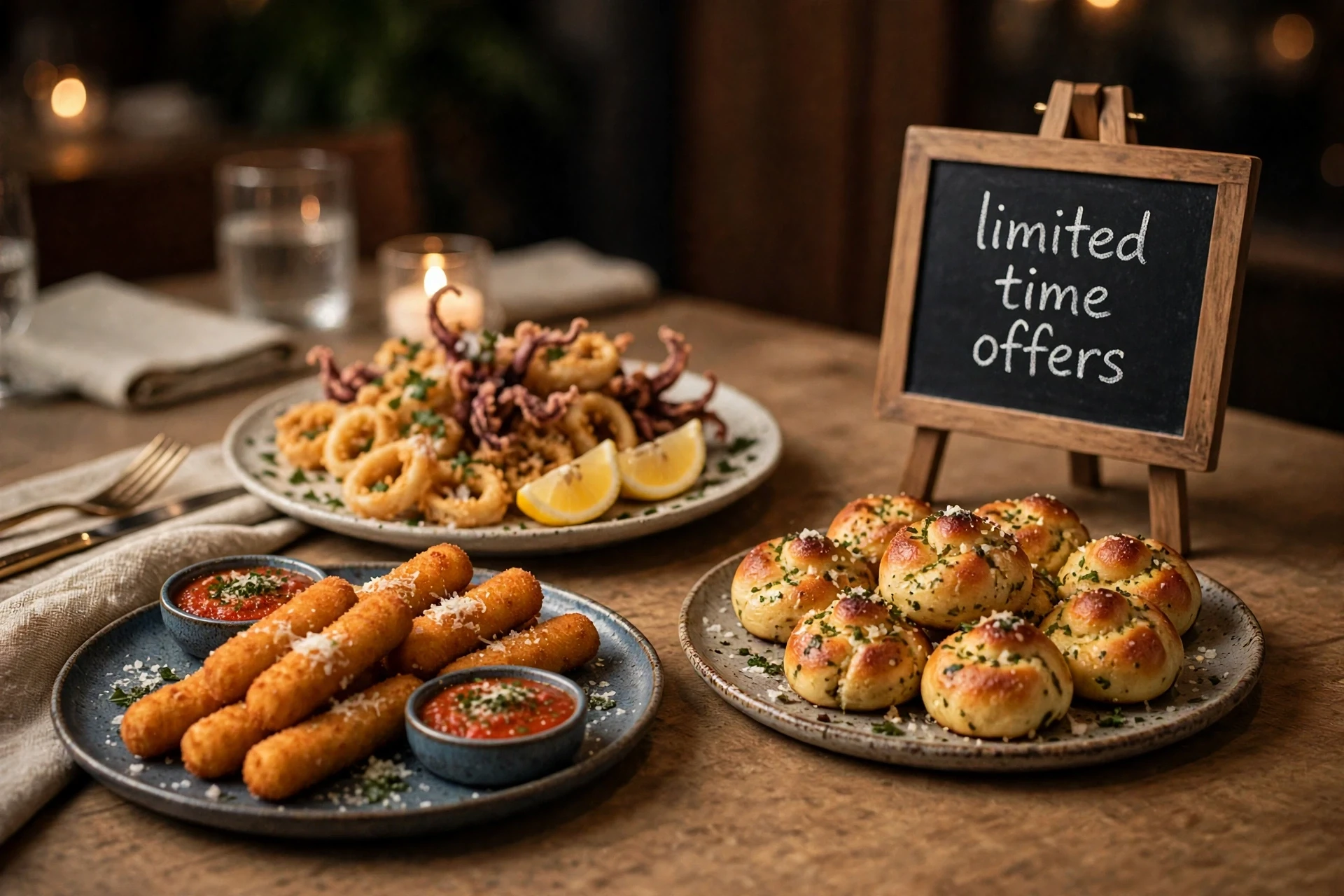
Time-box every offer.
Two to four weeks, one star item, a real end date. Urgency is the offer — without an end date, there is no reason to come this week. A pizza shop's special that ends on the 31st gets people in this week; the same special with no end date gets put off until never. A short run also lets you test: if the offer works, bring it back; if it does not, it ends quietly and nobody remembers. Never leave an offer open-ended, and never extend it so often that the end date stops meaning anything.
Build value, do not just cut price.
A family meal, a lunch combo, a bundle with a side and a drink feels like a deal and protects your margin better than a straight discount. The customer sees a full table for one price; you keep the margin because the bundle is built from items that cost you little. A BBQ platter for four, a Thai lunch combo with soup, an Italian family pasta night — each one feels generous and still pays. A straight 20% off just makes the same food cheaper. A bundle makes the same food feel like more.
Protect your stars.
Discount slow movers and bundles, not your best-selling dish at full margin. Never put your signature item on sale. Your signature dish is the reason people come — putting it on sale tells them it was overpriced all along, and they will wait for the next sale before ordering it again. Use the offer to move what sits: the appetizer that rarely sells, the side nobody orders, the weekday lunch slot that stays empty. The stars sell themselves at full price; let the offer do its work on everything else.
One offer at a time.
Two competing deals confuse customers and staff, and neither one gets remembered. One offer means one message on the menu, one line at the counter, one postcard — and a customer who can repeat it to a friend. When the staff can say the offer in one sentence, customers can remember it, and friends hear about it. Run one offer, finish it, and then run the next. A restaurant with one clear deal beats a restaurant with five deals nobody can name.
Print the offer and the end date.
On the menu and on the postcard. An offer customers can hold in their hands is an offer they act on. It goes on the fridge, it gets passed to a neighbor, it sits on the counter until the day it ends. Put the end date in plain words, big enough to read — "Ends Sunday, March 31" — and print it everywhere the offer appears. A deal that lives only online is easy to forget; a deal printed on the menu they already have in their hands is hard to miss.
Where to start
Pick one bundle from dishes you already serve, give it a two-to-four-week run with a real end date, and print it on the menu and the next postcard. One offer, one end date, one test — then keep what worked and retire what did not.
AS SEEN IN

Call or Text 646-721-1569
Call or text us for a free phone consultation and special discounted prices. Available 10am–10pm EST, 7 days a week. Call 646-721-1569.